
Directorate General of Civil Aviation (DGCA) eligibility criteria for aspiring pilots and aviation professionals in India:
DGCA Eligibility Criteria:
Introduction
The Directorate General of Civil Aviation (DGCA) is the regulatory body for civil aviation in India. Operating under the Ministry of Civil Aviation, it is responsible for regulating air transport services, enforcing civil air regulations, air safety, and airworthiness standards. One of the most critical roles of the DGCA is to establish and maintain eligibility standards for individuals aspiring to enter the aviation sector, especially for roles such as pilots, aircraft maintenance engineers (AMEs), flight dispatchers, and air traffic controllers.
This article offers an in-depth examination of the DGCA’s eligibility criteria across various certifications and licenses, focusing particularly on those aspiring to become commercial pilots in India.
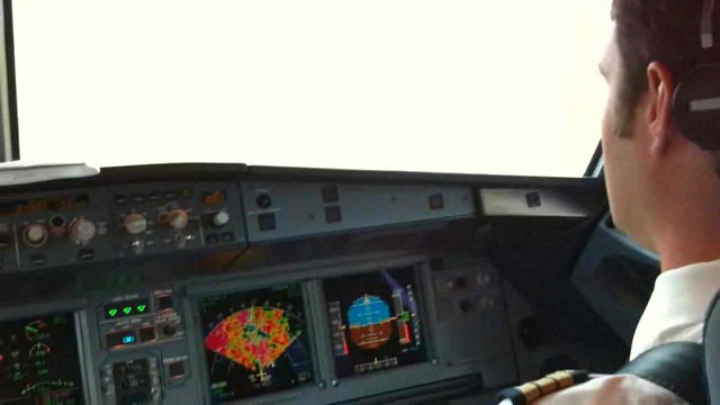
Section 1: DGCA Overview
1.1 What is the DGCA?
The Directorate General of Civil Aviation is the apex aviation regulatory body in India, headquartered in New Delhi. Its primary functions include:
- Licensing of pilots, aircraft maintenance engineers, and air traffic controllers
- Regulation of civil aviation operations
- Certification of aircraft and aerodromes
- Ensuring safety and compliance with international aviation norms
- Investigation of aviation incidents and accidents
Section 2: DGCA Eligibility for Pilot Licenses
The most sought-after licenses issued by the DGCA are:
- Student Pilot License (SPL)
- Private Pilot License (PPL)
- Commercial Pilot License (CPL)
- Airline Transport Pilot License (ATPL)
Each of these licenses has distinct eligibility requirements which are discussed below.
2.1 Student Pilot License (SPL)
2.1.1 Overview
The SPL is the foundational license that allows a candidate to begin flight training. It is typically issued by a DGCA-approved Flying Training Organization (FTO).
2.1.2 Eligibility Criteria
- Age: Minimum 16 years
- Educational Qualification: At least 10th standard (SSC/Matriculation) from a recognized board
- Medical: Class II Medical Certificate issued by DGCA-approved medical examiners
- Language Proficiency: Ability to speak, read, and understand English
- Nationality: Indian nationals or foreign nationals with appropriate permits
2.1.3 Required Documents
- 10th marksheet and certificate
- Birth certificate or passport
- Aadhaar or valid government ID
- Medical certificate
- Passport-sized photographs
2.2 Private Pilot License (PPL)
2.2.1 Overview
The PPL is a more advanced license allowing holders to fly private aircraft non-commercially.
2.2.2 Eligibility Criteria
- Age: Minimum 17 years
- Educational Qualification: 10+2 with Physics and Mathematics
- Medical: DGCA Class II Medical (Class I recommended)
- Flight Training: Minimum of 40 flying hours, including 20 hours solo
- Examinations: Must pass DGCA exams in Air Navigation, Aviation Meteorology, Air Regulations, and Aircraft Technical Knowledge
2.3 Commercial Pilot License (CPL)
2.3.1 Overview
The CPL is a professional license that allows a pilot to fly aircraft commercially.
2.3.2 Eligibility Criteria
- Age: Minimum 18 years
- Educational Qualification:
- 10+2 or equivalent with Physics and Mathematics from a recognized board
- Open school candidates (NIOS) are accepted if the subjects match DGCA standards
- Medical: DGCA Class I Medical Certificate (conducted by DGCA-approved medical examiners or Air Force Medical Board)
- Language Proficiency: Proficient in English; must clear an Aviation English Language Proficiency test
- Flying Hours: Minimum 200 hours of flying (including specific types such as solo, cross-country, instrument time)
- Examinations: Must clear DGCA exams in:
- Air Navigation
- Air Meteorology
- Air Regulations
- Technical General
- Technical Specific
- Radio Telephony (RTR) – conducted by WPC or DGCA
2.3.3 Preferred Qualifications (Not mandatory but beneficial)
- Bachelor’s degree in Science, Engineering, or Aviation
- NCC Air Wing experience
- Flight simulator training
2.4 Airline Transport Pilot License (ATPL)
2.4.1 Overview
ATPL is the highest level of aircraft pilot certification. It allows the holder to act as pilot-in-command (Captain) of large, multi-crew aircraft.
2.4.2 Eligibility Criteria
- Age: Minimum 21 years
- Educational Qualification: 10+2 with Physics and Mathematics
- Medical: DGCA Class I Medical Certificate
- Flight Experience:
- Minimum 1500 hours total flying time
- 500 hours as pilot-in-command (PIC)
- 250 hours of cross-country
- 100 hours night flying
- 75 hours instrument time
- Examinations:
- Air Navigation
- Aviation Meteorology
- Air Regulations
- Radio Telephony (RTR)
- Technical General
- Performance and Planning
- Flight Simulator Check
Section 3: DGCA Medical Requirements
3.1 Class II Medical
Used for SPL and PPL holders.
- Can be obtained from DGCA-approved Class II Medical Examiners
- Includes ECG, vision check, urine/blood tests, hearing test
3.2 Class I Medical
Mandatory for CPL and ATPL applicants.
- Conducted by DGCA-approved centers such as:
- AFCME (New Delhi)
- IAM (Bangalore)
- Apollo Hospitals (Hyderabad)
- Includes full-body check-up, cardiovascular test, audiometry, ophthalmology, lung function tests, etc.
3.3 Disqualifying Conditions
- Color blindness
- Severe myopia or hypermetropia
- Hearing loss (uncorrectable)
- Psychiatric or neurological disorders
- Epilepsy, uncontrolled diabetes or hypertension
Section 4: DGCA Eligibility for Other Aviation Roles
4.1 Aircraft Maintenance Engineer (AME)
4.1.1 Overview
AMEs ensure aircraft are airworthy by conducting repairs and inspections.
4.1.2 Eligibility Criteria
- Age: Minimum 16 years
- Education: 10+2 with Physics, Chemistry, and Mathematics
- Medical: Class II medical fitness
- Training: Must complete a DGCA-approved AME course (2–4 years)
- Examinations: Must pass DGCA module exams
4.2 Flight Dispatcher
4.2.1 Overview
Dispatchers plan and monitor flight operations.
4.2.2 Eligibility
- Age: Minimum 21 years
- Education: Graduate in Science or Engineering
- Training: Must undergo dispatcher training at a DGCA-approved institute
- Exams: Must clear DGCA Flight Dispatcher License exams
4.3 Cabin Crew and Flight Attendants
4.3.1 Eligibility
- Age: 18–27 years
- Education: Minimum 10+2
- Height: Minimum height as per airline standards (typically 155 cm for females, 170 cm for males)
- Medical: Class II fitness
- Training: Airline or institute-specific training, not under DGCA licensing
Section 5: Foreign Pilot License Conversion
5.1 Conversion Process
Foreign-trained pilots can convert their license to an Indian DGCA license.
5.1.1 Eligibility
- Valid foreign CPL or ATPL
- Class I Medical (India)
- Must pass DGCA theoretical exams: Air Regulations, Aviation Meteorology, Air Navigation, Technical General
- Flying hours must be validated by DGCA
- RTR (Aero) license from WPC or DGCA
Section 6: Key Institutions for DGCA-Approved Training
- Indira Gandhi Institute of Aeronautics (IGIA)
- Indira Gandhi Institute of Aviation Technology
- Indira Gandhi Institute of Aeronautical Sciences
- Capt. Sahil Khurana Aviation Academy
- Indira Gandhi Institute of Aeronautical Engineering
Section 7: Steps to Becoming a DGCA-Licensed Pilot
- Choose the right flying school
- Obtain Class II Medical
- Apply for SPL
- Begin flight training
- Clear CPL ground exams
- Accumulate 200 flying hours
- Get Class I Medical
- Clear RTR exam
- Apply for CPL issue via eGCA portal
Section 8: Common Challenges
8.1 Medical Disqualification
Minor issues such as eyesight can often be corrected with lenses, but permanent conditions may halt a career.
8.2 DGCA Exam Difficulty
DGCA ground papers require rigorous preparation, especially Navigation and Technical subjects.
8.3 High Costs
Flight training in India can cost ₹35–₹50 lakhs. Scholarships or loans are rare and hard to secure.
Section 9: DGCA eGCA Portal
The DGCA has digitized its licensing procedures
9.1 Services Available
- License application and renewal
- Medical appointment scheduling
- Exam registration
- Training record uploads
- Document submission
Conclusion
The DGCA plays a critical role in maintaining the high standards of Indian aviation. Its eligibility criteria ensure that only the most qualified, healthy, and capable individuals earn licenses to fly, repair, or manage aircraft. Whether you aim to become a commercial pilot, maintenance engineer, or flight dispatcher, understanding DGCA’s eligibility framework is the first crucial step. Meeting these criteria demands dedication, academic competence, physical fitness, and significant financial investment, but the rewards of an aviation career are vast and enduring.
CLICK 👉 download 300 aviation books just 1 MB
CLICK 👉 AIRBUS A320 COURSE
CLICK 👉 BOEING 737 PILOT COURSE
CLICK 👉 BOEING 747 PILOT COURSE
CLICK 👉 BOEING 757 PILOT COURSE
CLICK 👉 BOEING 767 PILOT COURSE
CLICK 👉 BOEING 777 PILOT COURSE
CLICK 👉 BOEING 787 PILOT COURSE
CLICK 👉 CESSNA 150 PILOT COURSE
CLICK 👉 CESSNA 152 COURSE
CLICK 👉 CESSNA 162 SKYCATCHER COURSE
CLICK 👉 CESSNA 172N SKYHAWK
CLICK 👉 CESSNA 172S COURSE
CLICK 👉 CESSNA 182T SKYLANE
CLICK 👉 ROBINSON R22 COURSE
CLICK 👉 ROBINSON R44 RAVEN II
CLICK 👉 PIPER ARCHER III PA-28-181 FULL COURSE
Click 👉 Online pilot training course