
Airline Transport Pilot License (ATPL)—covering its definition, eligibility, training requirements, costs, examination structure, and career opportunities.
Airline Transport Pilot License (ATPL): A Complete Guide
Introduction
The Airline Transport Pilot License (ATPL) is the highest level of aircraft pilot certification and is considered the pinnacle of a professional pilot’s career. Holding an ATPL signifies that a pilot is fully qualified to act as Pilot-in-Command (PIC) of a large commercial aircraft operating under airline regulations. It is the final goal for most pilots who seek to work in commercial airline operations.
This guide will walk you through all aspects of the ATPL—from eligibility and requirements to training pathways, examinations, and career opportunities.
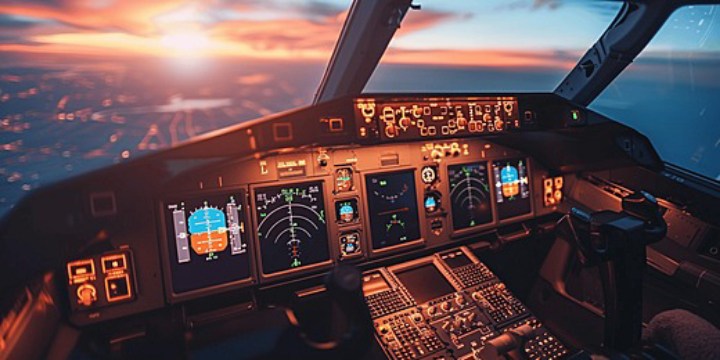
1. What is an ATPL?
An Airline Transport Pilot License (ATPL) is a certification issued by a country’s civil aviation authority that allows the holder to act as the Captain (Commander) of a multi-crew aircraft engaged in commercial air transport.
Key Features of ATPL:
- Allows pilots to serve as captain of scheduled airline flights.
- Required by international aviation authorities (e.g., FAA, EASA, ICAO) for airline operations.
- Involves extensive flight experience, in-depth theoretical knowledge, and rigorous skill evaluations.
- Considered the terminal license in civilian aviation.
2. ATPL Around the World
Different countries issue ATPL under the regulations of their respective aviation authorities:
- FAA ATPL (USA) – Issued by the Federal Aviation Administration.
- EASA ATPL (Europe) – Issued under the European Union Aviation Safety Agency.
- DGCA ATPL (India) – Regulated by the Directorate General of Civil Aviation.
- CAA ATPL (UK) – Managed by the UK Civil Aviation Authority.
- Transport Canada ATPL – Administered by Transport Canada Civil Aviation (TCCA).
- CASA ATPL (Australia) – Managed by the Civil Aviation Safety Authority.
Despite regional variations, all ATPLs adhere to ICAO (International Civil Aviation Organization) standards, allowing conversion between countries.
3. Eligibility Requirements
To obtain an ATPL, candidates must meet certain academic, medical, and flight experience standards.
General Requirements:
- Minimum Age: 21 years
- Medical Certificate: Must hold a valid Class 1 Medical Certificate (most stringent aviation health standard).
- Educational Qualification: Completion of secondary education; proficiency in Mathematics, Physics, and English is essential.
- English Language Proficiency: Must meet ICAO Level 4 or higher in speaking and understanding English.
4. Flight Experience Requirements
ATPL is not an entry-level license; it is the culmination of years of training and flying. Here’s a breakdown of typical minimum flight experience:
| Flight Time Category | Requirement (FAA) | Requirement (EASA) |
|---|---|---|
| Total Flight Time | 1,500 hours | 1,500 hours |
| Pilot-in-Command (PIC) | 250 hours | 500 hours (some may be PICUS*) |
| Night Flying | 100 hours | 100 hours |
| Instrument Time | 75 hours | 75 hours |
| Cross-Country | 500 hours | 200 hours |
| Simulator Training | Varies | Up to 50 hours allowed |
*PICUS: Pilot-in-Command Under Supervision
These hours must be logged and verified in a certified pilot logbook.
5. ATPL Training Pathways
There are two main pathways to acquiring an ATPL:
a. Modular Pathway
- Step-by-step approach.
- Start with a Private Pilot License (PPL), then acquire a Commercial Pilot License (CPL), and gradually build flying hours.
- ATPL theoretical exams can be taken after the CPL.
- Common for those training part-time or self-funding their journey.
b. Integrated ATPL Program
- An intensive, full-time course offered by flight academies.
- Combines all stages (PPL, CPL, IR, MCC, ATPL theory) into a single, continuous training.
- Typically completed in 18 to 24 months.
- Suitable for cadets pursuing airline-sponsored or structured programs.

6. Theoretical Knowledge (ATPL Ground School)
The ATPL requires mastery of a broad range of aviation subjects. These are tested via written exams and oral evaluations.
Core Subjects:
- Air Law
- Aircraft General Knowledge
- Flight Planning & Monitoring
- Human Performance
- Meteorology
- Navigation (Radio, General, and Instruments)
- Operational Procedures
- Performance
- Principles of Flight
- Mass and Balance
- Communications (VFR and IFR)
Exam Structure:
- EASA ATPL: 13 exams.
- FAA ATP: One comprehensive written exam (ATP written knowledge test).
- Other authorities: Vary between 10-14 exams.
Most exams are multiple-choice and require a passing score of 75% or higher.
7. Skill Tests and Checkrides
In addition to theoretical exams, ATPL candidates must pass practical evaluations, including:
- Type Rating Checkride (on specific aircraft like Boeing 737, Airbus A320, etc.).
- Multi-Crew Cooperation (MCC) Training.
- Line-Oriented Flight Training (LOFT) – scenario-based training in simulators.
- ATPL Skills Test – often includes emergency procedures, instrument approaches, and system management.
For FAA, the ATP checkride must be performed in a full flight simulator or actual aircraft under the supervision of a Designated Pilot Examiner (DPE).
8. ATPL vs. Frozen ATPL (Europe & Others)
In Europe and some ICAO regions, there’s a distinction between Frozen ATPL and Unfrozen ATPL.
Frozen ATPL:
- A pilot has passed all ATPL theory exams and completed CPL, IR, and MCC.
- Can work as First Officer in airlines.
- “Frozen” until the pilot meets the 1,500-hour flight time requirement.
Unfrozen ATPL:
- Full ATPL issued after meeting all experience and skill test requirements.
- Pilot becomes eligible to serve as Captain.
9. Cost of ATPL Training
The cost of obtaining an ATPL depends on the training path and location. Here’s a general estimate:
| Country | Estimated Cost (USD) |
|---|---|
| United States (FAA) | $70,000 – $120,000 |
| Europe (EASA) | $90,000 – $150,000 |
| India (DGCA) | $50,000 – $70,000 |
| Canada | $60,000 – $100,000 |
| Australia | $70,000 – $120,000 |
What Affects Cost:
- Choice of integrated vs. modular training
- Aircraft rental fees and fuel prices
- Instructor fees and simulator time
- Ground school and exam fees
- Visa, accommodation, and travel for international students
Scholarships, student loans, and airline cadet programs can offset these costs.
10. Top Training Institutions for ATPL
Choosing the right flight school is crucial. Renowned institutions worldwide include:
- CAE Aviation Academy (Global)
- L3Harris Airline Academy (UK, USA, NZ)
- ATP Flight School (USA)
- FlightSafety International (USA)
- Indira Gandhi Institute of Aeronautics (India)
- Oxford Aviation Academy (UK)
- Emirates Aviation University (UAE)
Look for schools with:
- Accreditation from aviation authorities
- High graduate placement rates
- Modern fleet and simulators
- Industry partnerships with airlines
11. Career Opportunities with an ATPL
Holding an ATPL unlocks the highest level of piloting roles, including:
a. Airline Captain
The most common career goal. As PIC, captains make critical decisions, oversee the crew, and ensure safety.
b. First Officer (Co-Pilot)
While working toward full ATPL flight hours, pilots start as co-pilots in airline operations.
c. Corporate Jet Pilot
Operate business jets for corporations or VIP clients. Often requires a type rating and excellent customer service skills.
d. Flight Instructor (Advanced)
Train commercial or ATPL students. Adds to your flight hours and opens academic roles.
e. Cargo Operations
Operate freight flights for logistics giants like FedEx, UPS, DHL, etc.
f. Test or Ferry Pilot
Fly newly built or repaired aircraft to testing sites or customer locations.

12. Responsibilities of an ATPL Holder
As the captain or senior pilot, ATPL holders bear immense responsibility:
- Ensure compliance with aviation laws and SOPs
- Conduct pre-flight planning and risk assessments
- Manage cockpit crew and communication
- Handle in-flight emergencies effectively
- Make real-time decisions under pressure
- Ensure passenger and crew safety
13. Renewal and Revalidation
An ATPL remains valid as long as:
- The pilot holds a current Class 1 Medical Certificate
- The required proficiency checks (every 6-12 months) are completed
- Type ratings are revalidated regularly through simulator or flight tests
Pilots also undergo periodic Line Checks and recurrent training to stay up-to-date with operational procedures and new technologies.
14. Challenges in Earning and Holding an ATPL
While prestigious, the ATPL journey presents many challenges:
- High financial investment
- Lengthy and rigorous training
- Intense theoretical and practical evaluations
- Stringent health standards
- High responsibility and stress levels
- Ongoing recertifications and checkrides
However, the rewards—financially, professionally, and personally—can be substantial for those who persevere.
15. Final Thoughts
The Airline Transport Pilot License (ATPL) is more than just a certification; it’s a professional badge of honor in the aviation industry. It reflects a pilot’s mastery of technical knowledge, flight proficiency, and leadership qualities required to operate the world’s most advanced aircraft.
Whether your dream is to captain international flights, operate business jets, or become a flight examiner, the ATPL is your key to those ambitions. With meticulous preparation, dedication, and the right guidance, earning an ATPL can be one of the most fulfilling achievements in your professional life.
CLICK 👉 download 300 aviation books just 1 MB
CLICK 👉 AIRBUS A320 COURSE
CLICK 👉 BOEING 737 PILOT COURSE
CLICK 👉 BOEING 747 PILOT COURSE
CLICK 👉 BOEING 757 PILOT COURSE
CLICK 👉 BOEING 767 PILOT COURSE
CLICK 👉 BOEING 777 PILOT COURSE
CLICK 👉 BOEING 787 PILOT COURSE
CLICK 👉 CESSNA 150 PILOT COURSE
CLICK 👉 CESSNA 152 COURSE
CLICK 👉 CESSNA 162 SKYCATCHER COURSE
CLICK 👉 CESSNA 172N SKYHAWK
CLICK 👉 CESSNA 172S COURSE
CLICK 👉 CESSNA 182T SKYLANE
CLICK 👉 ROBINSON R22 COURSE
CLICK 👉 ROBINSON R44 RAVEN II
CLICK 👉 PIPER ARCHER III PA-28-181 FULL COURSE
Click 👉 Online pilot training course